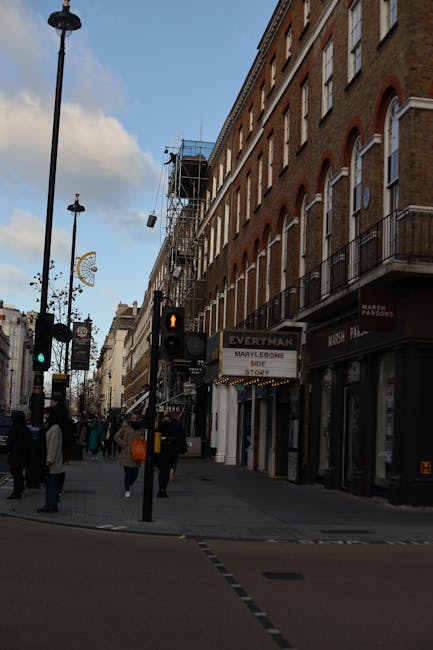
Hidden parking costs for Marylebone removals explained
Parking can be the quiet little problem that turns an otherwise smooth move into a stressful, expensive one. If you are planning a move in Marylebone, the headline quote from a removals company may look fine at first glance, then the parking side of things starts creeping in: suspended bays, permit checks, loading restrictions, waiting time, extra walking distance, even a second helper if the van cannot get close enough. This guide on hidden parking costs for Marylebone removals explained breaks it all down in clear English, so you can spot the charges before they catch you out.
Marylebone is beautifully central, but it is not exactly a forgiving place for moving day logistics. Narrow streets, controlled parking, busy traffic, and building access rules can all nudge the final bill upward. The good news? Most of these costs are predictable if you know what to ask, what to check, and where the real pressure points are. Let's get into the details without the fluff.
Table of Contents
- Why hidden parking costs matter
- How parking charges show up on a removal job
- Key benefits of planning parking properly
- Who this is for and when it makes sense
- Step-by-step guidance for avoiding surprises
- Expert tips for better results
- Common mistakes to avoid
- Tools, resources and recommendations
- Law, compliance, standards and best practice
- Options, methods and comparison table
- Case study or real-world example
- Practical checklist
- Conclusion
- Frequently asked questions
Why Hidden parking costs for Marylebone removals explained Matters
Parking is not just a side issue. In Marylebone, it can be one of the biggest reasons a move runs over time. And when a removals team runs over time, costs can rise quickly. That is especially true if the crew has to park further away, move items in stages, or wait while someone sorts out access at the building or on the street.
To be fair, most people focus on the obvious parts of moving: van size, packing, dismantling furniture, and the distance between properties. But parking affects all of those. If the vehicle cannot park outside, even a small flat move can feel like a long-haul job. You may think, "It's only a few streets away, how hard can it be?" In Marylebone, that answer is often: harder than it looks.
This matters for three reasons. First, it affects budget control. Second, it affects timing, and timing affects stress. Third, it affects the quality of the move itself. A well-planned arrival point means fewer knocks, fewer delays, and fewer people carrying awkward items through crowds or around corners in the rain. That last bit is not glamorous, but it is real life.
If you are comparing removal options, it helps to look beyond the price headline and study the service details carefully. A clear estimate, sensible parking assumptions, and transparent terms matter as much as the van itself. You can also review a company's pricing and quotes information to understand how costs are usually framed before booking.
How Hidden parking costs for Marylebone removals explained Works
Hidden parking costs usually appear because the move depends on street access that is not fully confirmed in advance. In practical terms, the removal company may quote based on a normal loading scenario, then charge extra if the actual parking setup is harder than expected. That does not always mean anyone is being sneaky. Often it simply means the move was more complex than the initial information suggested.
Here is how it typically works.
- Parking cannot be guaranteed outside the property. Central London streets often have restrictions, active bays, or very limited space.
- A permit or suspension may be needed. Some moves require advance planning so the van can stop legally and safely.
- The parking point may be farther away than expected. If the van must stop around the corner, the crew spends more time carrying items.
- Waiting time may be charged. If access is blocked, a permit is wrong, or someone is not ready, the clock keeps moving.
- Extra labour may be added. More distance means more walking, more lifting, and sometimes more staff time.
Let's use a simple example. A one-bedroom flat on a busy Marylebone street looks straightforward on paper. But on move day, the van cannot stop outside because a bay is occupied, building traffic management is in place, and the lift is shared with other residents. The crew parks a short distance away and has to make repeated trips. What should have been a neat two-hour job becomes a longer, more expensive one. No drama, just the maths.
That is why a good moving plan starts with access questions, not boxes. If you are moving a flat, a home, or even a compact office, look at flat removals or home moves services that make access planning part of the discussion from the start.
Key Benefits and Practical Advantages
Planning parking properly does more than prevent bad surprises. It makes the whole move calmer and more efficient. That can be hard to appreciate until the boxes are stacked in the hallway and the van is nowhere near the kerb.
Here is what good parking planning gives you:
- Clearer budgeting because the quote is closer to the real job.
- Less stress on the day because everyone knows where the van will stop.
- Faster loading and unloading when access is smooth and direct.
- Lower risk of damage from repeated carrying over longer distances.
- Better crew efficiency which can reduce the need for extra time or extra labour.
There is also a less obvious benefit: the move feels more professional. You notice it in the rhythm of the day. The team arrives, parks in the agreed place, gets the trolley out, and starts moving. No scrambling. No guessing. Just steady progress. That steadiness matters more than people realise.
If you need extra support with wrapping, boxing, or preparing belongings so they can be moved efficiently from a restricted parking spot, it may be worth looking at packing and boxes or packing and unpacking services. Better packing also means less time spent faffing about on the pavement. A tiny thing, but it adds up.
Who This Is For and When It Makes Sense
This topic matters most if your move involves central London streets, tight access, or a building with stricter rules than a typical suburban house. Marylebone is a strong fit for that, obviously. But it is not only for large family moves. In fact, some of the most parking-sensitive jobs are small ones.
You should pay extra attention to parking costs if you are:
- moving from a flat with limited street access
- living on or near a busy main road
- moving at peak times when roadside space is harder to secure
- relocating a business where time windows are tight
- moving bulky or fragile items that need close vehicle access
- arranging a same-day move with little room for error
Students also run into this more than they expect. A simple room move can become awkward if the van has to park far away, especially in winter when the pavement is wet and everyone is carrying bags, lamps, and the one chair they swear is "light enough". For that kind of move, student removals can be a sensible starting point because the service is built around smaller, often time-pressured jobs.
Office moves are a different story again. Parking issues can cause disruption for staff, neighbours, and deliveries. If timing matters, a well-planned office removals approach is usually worth the extra attention.
Step-by-Step Guidance
If you want to avoid hidden parking charges, treat parking as part of the removal brief, not an afterthought. Here is a sensible process.
- Check the exact street conditions. Look at whether your property sits on a restricted road, a narrow side street, or a busy loading area.
- Ask the building about access rules. Flats and managed buildings often have their own loading guidance, lift rules, or time slots.
- Measure the walking distance. Be realistic about how far the crew may need to carry items from the van to the door.
- Explain the item mix. Heavy furniture, fragile items, and awkward shapes can make long carries more expensive and slower.
- Request a quote that mentions parking assumptions. Do not settle for a vague yes-no answer.
- Confirm whether waiting time is charged. This is one of the most common sources of confusion.
- Keep the moving day timetable tight. If access is narrow, delays ripple very quickly.
If you are booking a van-based move, it may also help to compare the right vehicle and service style for the job. A compact move may suit man with van or man and van arrangements, while larger houses or multi-room jobs may need a bigger team and vehicle, such as removal truck hire or a fuller removal services package.
One practical tip that saves headaches: send photos. A couple of street-level pictures, the front entrance, and any nearby loading bay can be surprisingly useful. Not perfect, but better than a vague description typed in while you are half-packed and tired.
Expert Tips for Better Results
After enough moves, a pattern becomes obvious: the jobs that go smoothly are usually the ones where parking was discussed early and concretely. The ones that go sideways often relied on guesswork. Simple as that.
Some expert-level habits worth copying:
- Book with realism, not optimism. If parking is tight, say so. Underplaying the issue never helps.
- Build in a buffer. Even a 10-minute delay can snowball in Marylebone traffic.
- Tell the mover about unusual access. Low ceilings, communal entrances, double doors, and basement steps all matter.
- Check whether parking needs to be arranged in advance. Some properties need more lead time than others.
- Prepare the load area. The smoother the handover from home to van, the fewer minutes you pay for.
- Keep the building manager or concierge in the loop. A five-minute call can prevent a half-hour mess.
There is also a broader planning point. If your move is part of a larger life change, say renovating and needing temporary space, storage can give you breathing room. That can reduce the pressure to cram everything into one tight parking window, which is often where costs start rising.
And if you are comparing providers, make sure you are looking at more than just the cheapest line on the page. A well-run move with transparent parking assumptions is usually better value than a bargain that quietly grows by the hour. Truth be told, the cheap quote is not cheap if it turns into a day-long headache.
Common Mistakes to Avoid
Most parking-related surprises are avoidable. The trouble is that people are busy, moving is chaotic, and details get lost in the shuffle. Happens all the time.
- Assuming the van can park outside. In Marylebone, that is often the first wrong assumption.
- Forgetting to mention restricted access. A small detail now can become a fee later.
- Not checking building rules. Some buildings require booking lifts or loading bays, and some do not allow waiting in front of the entrance.
- Ignoring permit or suspension needs. If a bay must be arranged, do not leave it to the last minute.
- Overpacking the schedule. If everything is timed to the minute, one parking delay can break the whole day.
- Choosing the wrong vehicle size. Too small can mean multiple trips; too large can be hard to place legally or safely.
Another easy mistake is treating parking as "the mover's problem". It is a shared planning issue. The removals team can advise, but you usually know the building, street, and neighbours better than anyone else. That local knowledge counts. A lot.
If you are moving specialised items, parking matters even more. Piano moves, for instance, need extra care and close vehicle access because the item is heavy, awkward, and not something you want carried too far over uneven ground. For that kind of job, piano removals is the sort of service that deserves proper access planning from the outset.
Tools, Resources and Recommendations
You do not need fancy software to manage parking properly. A few simple tools and a calm checklist are enough in most cases.
- A phone camera for entrance photos, road signs, and bay markings.
- Notes app or checklist for recording access details while you are speaking to the building or the mover.
- Building paperwork if your property management company supplies loading instructions.
- Measurements of doorways, stairwells, or internal corridors if large furniture is involved.
- A rough time plan for when the van is expected to arrive and how long loading should take.
One useful recommendation is to keep all access details together in one message or document. That way nobody is searching through a chain of texts to find whether the loading bay is outside the front door or halfway down the road. It sounds small, but it saves a surprising amount of friction.
For broader company information, such as what kind of mover you are dealing with, it can help to review the about us page and the company's insurance and safety approach. That gives you a better feel for whether they handle awkward access with care or just hope for the best. Hope is not a strategy, as they say.
Law, Compliance, Standards, or Best Practice
Parking on London streets is not just a convenience issue. It sits inside a framework of local rules, road restrictions, and practical best practice. The exact requirements vary by street, borough, signage, and building setup, so it is wise to treat anything parking-related as something to verify rather than assume.
In plain English, best practice usually means this:
- park only where it is legal and safe
- plan for loading restrictions or time limits
- check whether temporary arrangements are needed
- avoid blocking access for neighbours, emergency services, or deliveries
- make sure the mover has accurate instructions before arrival
Removal companies should also handle customer information, payment details, and move instructions responsibly. If you are checking how a business handles admin and transactions, the site's payment and security and terms and conditions pages are worth a look. They help set expectations, especially around charges, timing, and responsibilities.
Best practice also includes fairness. If a quote changes because the parking situation was materially different from what was described, that should be explained clearly. Likewise, if the mover gives you a parking checklist or asks for photos, that is usually a sign they are trying to reduce the risk of guesswork. Good sign, that.
Options, Methods, or Comparison Table
Not every move needs the same approach. Here is a simple comparison of common ways parking issues are handled.
| Approach | Best for | Pros | Risks or drawbacks |
|---|---|---|---|
| Standard street parking plan | Properties with easier access and clear roadside space | Simple, efficient, usually lower cost | Can fail if space is unavailable on the day |
| Pre-arranged loading or permit approach | Tight Marylebone streets and busy move days | More reliable, less chance of delay | Needs advance coordination and sometimes extra admin |
| Short-distance carry from a legal parking spot | Moves where the van cannot stop directly outside | Flexible when access is limited | More labour, more time, and potentially higher cost |
| Smaller vehicle or man and van setup | Smaller homes, student moves, single-room jobs | Easier to position, often more agile in tight streets | May require more trips if the load is larger than expected |
| Full removals team with larger vehicle | Family homes, multi-room jobs, offices, or bulky items | More capacity, more hands, faster loading | Parking needs can be more demanding if the vehicle is larger |
If you are uncertain which option fits, a quick quote discussion is usually the best next step. The goal is not to pick the fanciest service. It is to pick the one that matches the street, the building, and the amount of lifting you actually need. No more, no less.
Case Study or Real-World Example
Here is a realistic Marylebone-style example. A couple are moving from a two-bedroom flat into a nearby house. At first glance, it looks like a tidy local move. Same area, short distance, not too many boxes. Easy, right? Well, almost.
They tell the mover the address, but they do not mention that the street has limited stopping space in the morning and that the building entrance is shared with a concierge-managed lobby. On move day, the van can only park a short distance away, and the team has to shuttle several loads through a narrow pavement area. Nothing dramatic, just slower than expected. The final bill rises because the time spent loading was longer than planned.
What changed the outcome on the next move? They sent photos in advance, checked the street restrictions, and agreed a realistic loading window. The same team, same general route, much smoother day. That is the point really. Not perfection. Just fewer surprises.
For a move like that, a service such as house removals or house removalists works best when access details are properly shared. If space is especially tight, the company may also suggest a vehicle that suits the street better, such as options around man with a van or a larger moving truck setup depending on the load.
Practical Checklist
Use this before you book, and again the day before the move. It is a small effort that can save real money.
- Have you checked whether parking outside the property is likely to be available?
- Do you know if the street has loading restrictions or time limits?
- Has the building confirmed any access rules, lift booking, or concierge requirements?
- Have you told the mover about narrow entrances, stairs, or long carry distances?
- Have you asked whether parking, waiting time, or extra labour could affect the final price?
- Have you shared photos of the street and entrance if the access looks tricky?
- Have you confirmed the arrival window and whether anyone needs to be present on site?
- Have you separated fragile, heavy, or specialist items so they can be handled properly?
- Have you checked the company's key policies, including recycling and sustainability if you need disposal or unwanted item handling?
- Have you kept a copy of your booking details, just in case?
If you can tick most of those off, you are in a much better place than the average mover. Seriously. A bit of prep here does more than most people expect.
Get a free quote today and see how much you can save.
Conclusion
Hidden parking costs for Marylebone removals are rarely random. They usually come from a gap between what the move looked like on paper and what the street, building, or timing looked like in real life. Once you understand that, the issue becomes far easier to manage.
The basic rule is simple: treat parking as part of the move plan, not a detail at the end. Ask direct questions. Share photos. Confirm restrictions. Build in time for Marylebone's real-world quirks. That is how you keep the bill steadier and the day calmer.
And, honestly, a move that starts with clarity tends to feel better all the way through. Less rushing, less guessing, less standing in the road with a clipboard and a worried face. Which, let's face it, nobody enjoys.
If you are planning your move now, a sensible first step is to speak to a removals team that understands central London access and can talk through the parking side properly. That one conversation can save a lot of noise later.
Frequently Asked Questions
What are hidden parking costs in a Marylebone removal?
They are extra charges that can appear when the removals team cannot park as close as expected, needs more time to load, or has to deal with restrictions, permits, or waiting time.
Why are parking costs more common in Marylebone than in quieter areas?
Marylebone has central London traffic, narrow streets, controlled parking, and busy building access. That combination makes simple parking assumptions less reliable.
Can I avoid parking charges completely?
Not always, but you can reduce the risk by checking street restrictions, sharing accurate access details, and asking whether parking is included in the quote.
Should I arrange parking myself or leave it to the removals company?
It depends on the job. Some companies help with the planning, but you often need to provide local knowledge, building details, and any restrictions. The best result usually comes from both sides sharing information.
Do parking problems increase the total moving time?
Yes. If the van has to park further away, loading and unloading usually take longer. That can increase labour time and, in some cases, the final cost.
Is a man and van service better for tight parking in Marylebone?
Sometimes, yes. Smaller vehicles can be easier to place in tight streets, especially for lighter or smaller moves. But the right choice depends on the load size and access conditions.
What should I tell a removals company about parking?
Tell them about street restrictions, loading bays, permit needs, concierge rules, walking distance to the entrance, and whether parking near the property is usually easy or difficult.
Do flats and apartment buildings create more parking issues than houses?
Often they do. Flats may have shared entrances, lift bookings, loading windows, or limited roadside access, which can all affect the move.
What happens if the van arrives and cannot stop outside?
The crew may need to park elsewhere and carry items further, wait for access to clear, or adjust the loading plan. Depending on the booking terms, that may affect the price.
How can photos help with parking planning?
Photos help the mover judge the street layout, bay markings, entrance position, and possible carry distance. They are not perfect, but they are far better than guesswork.
Should I worry about parking for a small move?
Yes, if the street is tight. Even small moves can become awkward if the van cannot park nearby or if the building access is difficult.
Where can I check the company's rules on pricing and booking?
You can review the company's pricing and quotes and terms and conditions pages for clearer expectations around how jobs are priced and handled.